

The ideal timeline for preparing for aged care
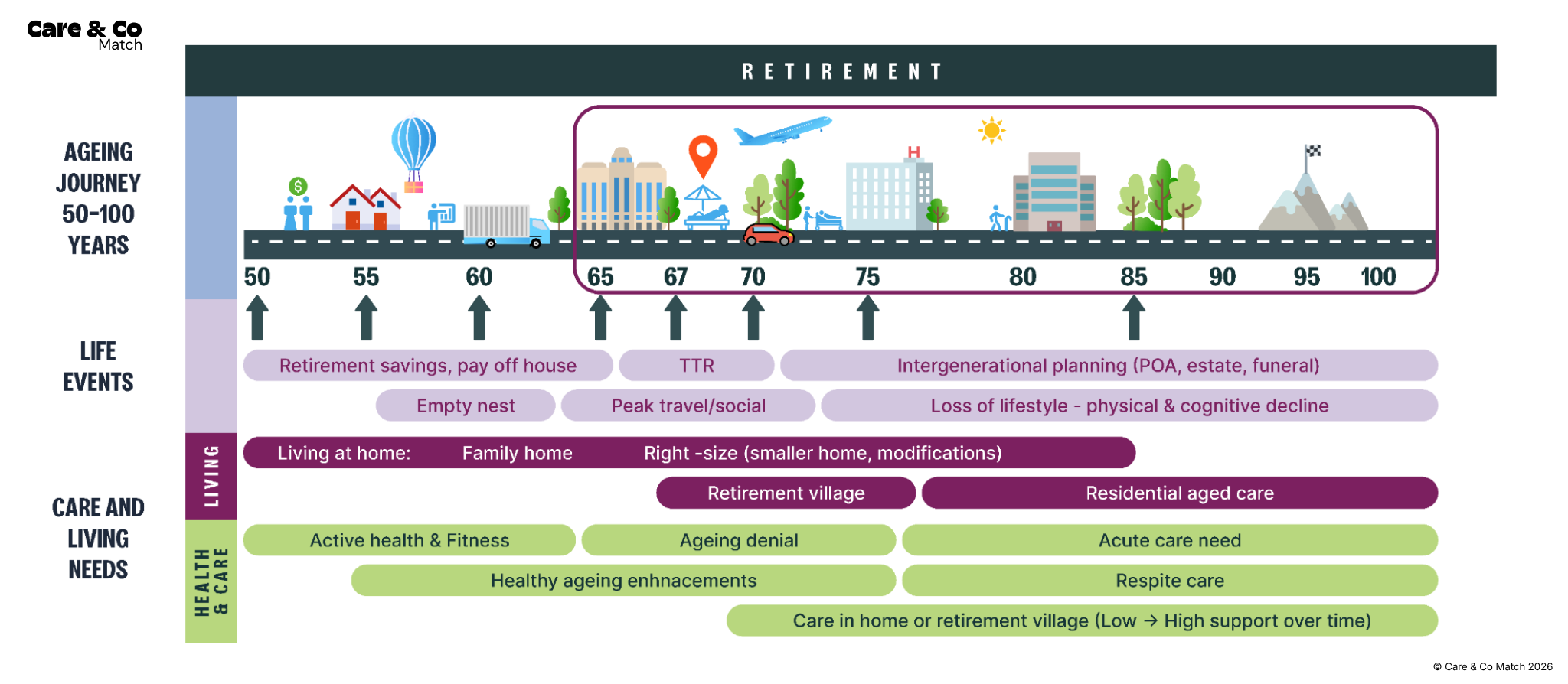
In Australia, ageing isn’t a single event - it’s a journey that unfolds over decades.
The difference between a smooth transition and a stressful one usually comes down to timing. When you plan early, you have options. When you don’t, decisions get made for you.
Here’s how that journey typically unfolds - and what to do at each stage.
50–60: building the foundations
Focus: financial readiness and future awareness
This stage is often defined by:
● Retirement savings and paying off the family home
● Children leaving home (“empty nest”)
● Peak earning years
From a care perspective, most people are still independent, but this is where awareness should start.
What to do:
● Start thinking about how and where you want to live long-term
● Understand the basics of the aged care system in Australia
● Begin conversations with your partner or family about future preferences
At this stage, you’re not planning for care yet - you’re setting yourself up for flexibility later.
Tip: A Living Preference Plan put together for you in collaboration with Care & Co Match helps you get clear on how and where you want to live as your needs change - before decisions become urgent. By documenting your preferences and care priorities early, you make future choices easier, more informed, and far less stressful for you and your family.
60–70: transition into retirement
Focus: lifestyle and early planning
This phase often includes:
● Transition to retirement (TTR)
● Increased travel and social activity
● Downsizing or modifying the home (“right-sizing”)
You’re still independent, but this is the ideal time to start actively planning.
What to do:
● Consider whether your home will suit you long-term
● Learn how to access support through My Aged Care
● Start exploring Support at Home (home care) as a future option
Where home care fits
Home care allows you to stay in your home while receiving support like:
● Cleaning and domestic help
● Personal care
● Transport and health services
The key thing most people miss: wait times apply, so understanding this early matters.
70–80: maintaining independence with support
Focus: staying at home longer
This is where needs may start to shift:
● Subtle physical or cognitive decline
● Increasing need for support at home
● Desire to maintain independence
What to do:
Register with My Aged Care before support becomes urgent
● Apply for a Support at Home Package early to avoid delays
● Start shortlisting providers
At this stage, care often looks like:
● Low to moderate home care support
● Gradual increase in services over time
You’re still in control, but planning ahead ensures you stay that way.
75–85: increasing care needs
Focus: flexibility and contingency planning
This stage often includes:
● More noticeable health changes
● Reduced mobility or independence
● Greater reliance on support
Care becomes more layered:
● Higher-level home care support
● Introduction of respite care
● Early consideration of residential options
Where respite care fits
Respite care is often overlooked, but it plays a critical role:
● Short-term care after hospital stays
● Temporary support to give family carers a break
● A way to trial a residential aged care home
What to do:
● Explore respite options before you need them
● Visit local providers
● Have clear discussions with family about next steps
80+: higher care and transition decisions
Focus: support, safety, and quality of care
At this stage, care needs are typically more complex:
● Acute health events
● Increased cognitive decline
● Safety becoming a concern at home
This is where many people transition into residential aged care.
Where residential aged care fits
Residential aged care provides:
● 24/7 clinical and personal care
● Accommodation and daily living support
● A safer environment for higher needs
What to do:
● Don’t wait for a crisis to start looking
● Understand costs and availability early
● Compare providers based on quality, not just vacancy
The reality most people face
Without planning, this journey often looks very different:
● Decisions made after a fall or hospital stay
● Limited provider choice due to urgency
● Families under pressure to act quickly
● Long wait times catching people off guard
Planning early avoids this.
Why timing changes everything
Across every stage - from active ageing to higher care - the same principle applies:
The earlier you prepare, the more control you keep.
Planning ahead allows you to:
● Stay at home longer with the right support
● Use respite care proactively, not reactively
● Choose the right residential provider, not just the available one
● Reduce stress for both you and your family
How Care & Co Match can help plan ahead
Through Care & Co Match, you can navigate every stage of this journey with expert support.
Whether you’re:
● Exploring home care options
● Considering respite care
● Preparing for residential aged care
Care & Co Match helps you:
● Understand the system
● Compare providers
● Find care that fits your needs and preferences
The journey is predictable, but the outcome depends on when you act. Connect with Care & Co Match to plan ahead and make confident care decisions at every stage.
How to access Care & Co Match:
Website: https://www.aspireplanning.com.au/supporting-ageing-parents/care-co-match
Phone: 1300 585 759